From Struggling Garden to Our New Backyard Playground
If you had stepped into my backyard earlier this year, you would have seen a space that was trying very hard to be something it simply was not meant to be.
The yard itself is modest, roughly twenty-five by thirty-five feet, enclosed by a wooden privacy fence that has weathered into a soft gray after years of Missouri sun and rain.
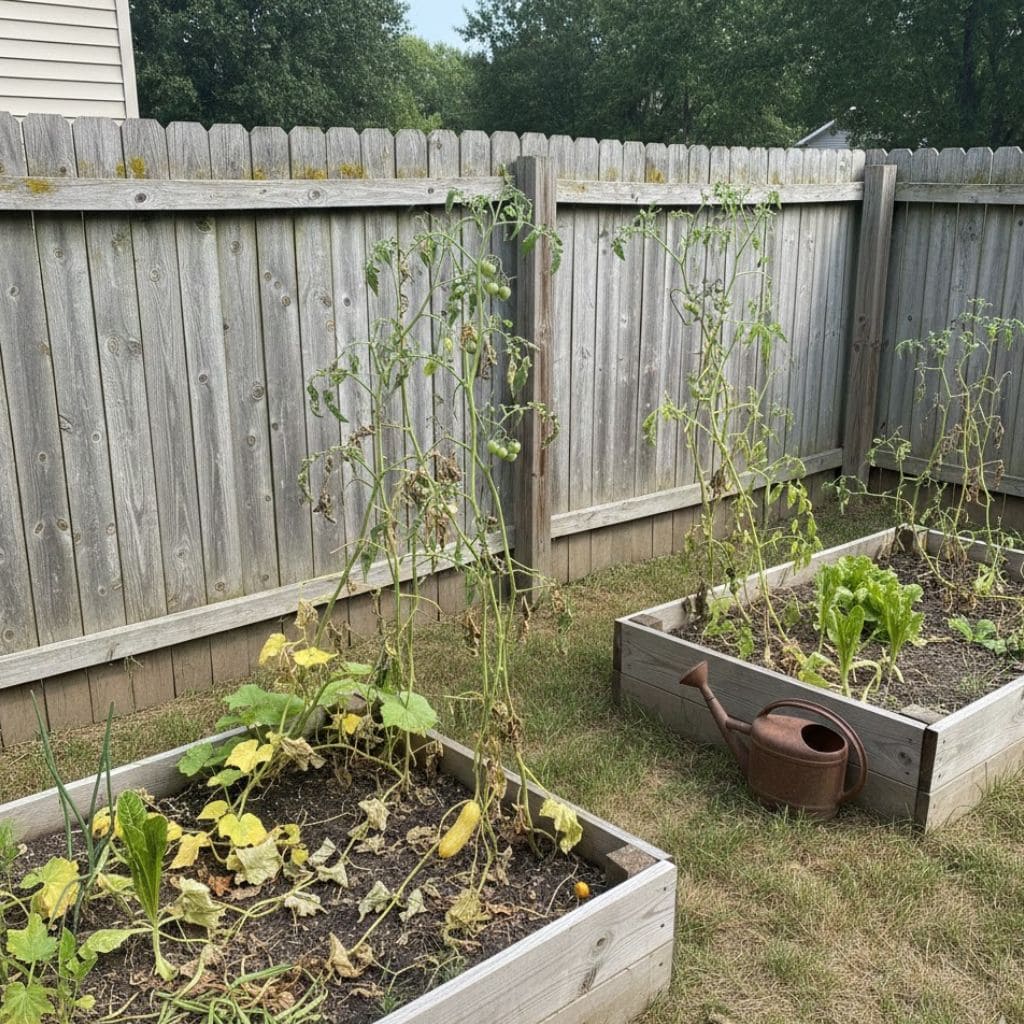
Along the right side, I had built two small raised garden beds from cedar planks I bought at Home Depot three summers ago.
I filled them with soil, planted tomatoes, cucumbers, green beans, and even tried lettuce in early spring.
In my mind, it was going to be our little productive garden. I imagined William picking cherry tomatoes straight from the vine and proudly carrying them inside for dinner.
Reality unfolded differently. The tomatoes grew tall but thin because I underestimated how much sunlight that corner actually receives.
The cucumbers produced four decent vegetables before the vines yellowed in July heat. Lettuce bolted quickly because I missed consistent watering during one particularly busy work week.
Some evenings, I would look out through the kitchen window at those struggling plants and feel more frustration than pride.
Between working full time, managing preschool schedules, cooking meals, and raising William alone, I did not have the consistent energy a productive garden requires.
One afternoon last month, that realization finally became clear.
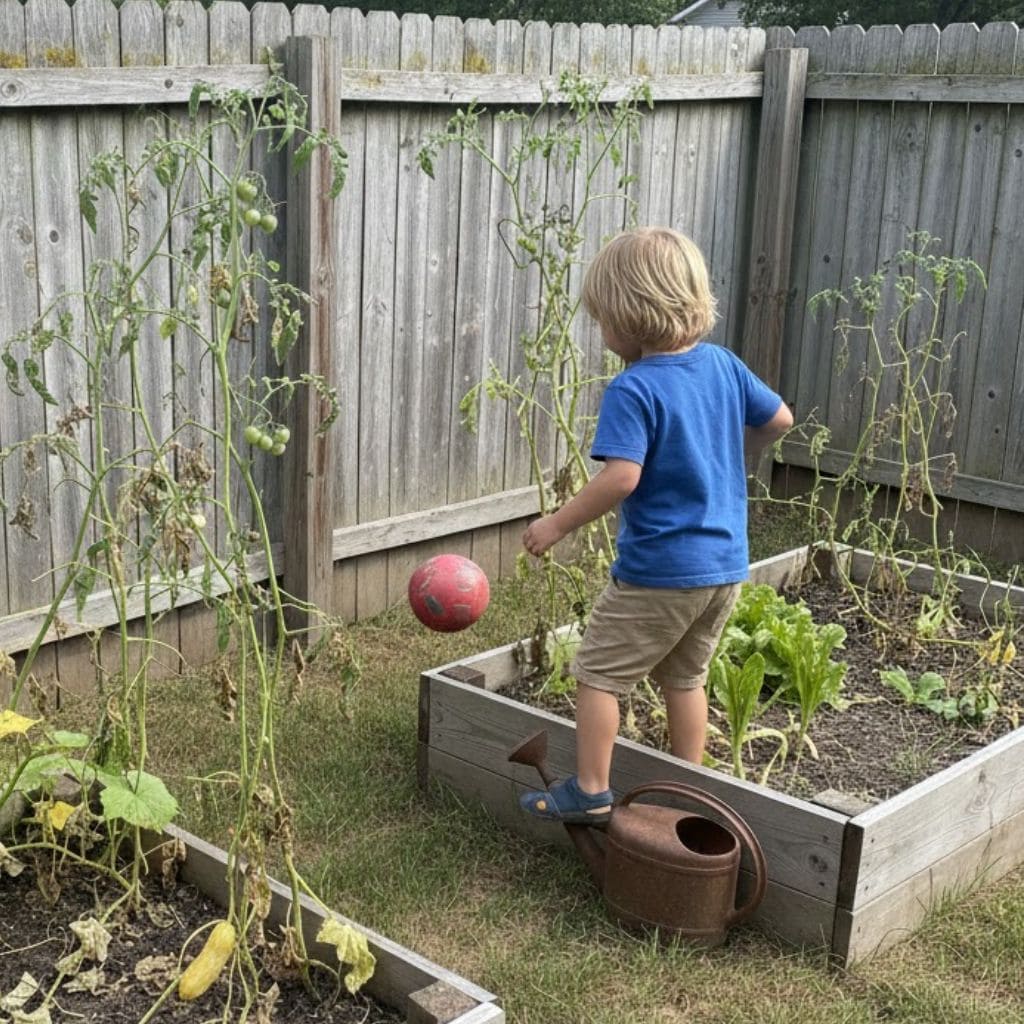
William was outside kicking a faded red plastic ball against the fence because there was nothing else to do. He kept stopping to avoid stepping into the garden beds.
Watching him adjust his movements around wooden frames that no longer served us, I suddenly thought, this yard does not need to grow vegetables right now. Then I decided to recreate it.
Letting Go of the Old Vision
The following Saturday, I walked outside with a shovel and gloves, fully prepared to dismantle the garden beds.
I will admit, it felt emotional. I had built those beds myself during a hopeful phase when I thought I could do everything well at once.
William came outside wearing his small blue gardening gloves, even though they are mostly decorative at this point.
He asked what we were doing, and I told him we were building something new.
He immediately asked if it could have a soccer goal. That enthusiasm made the decision easier.
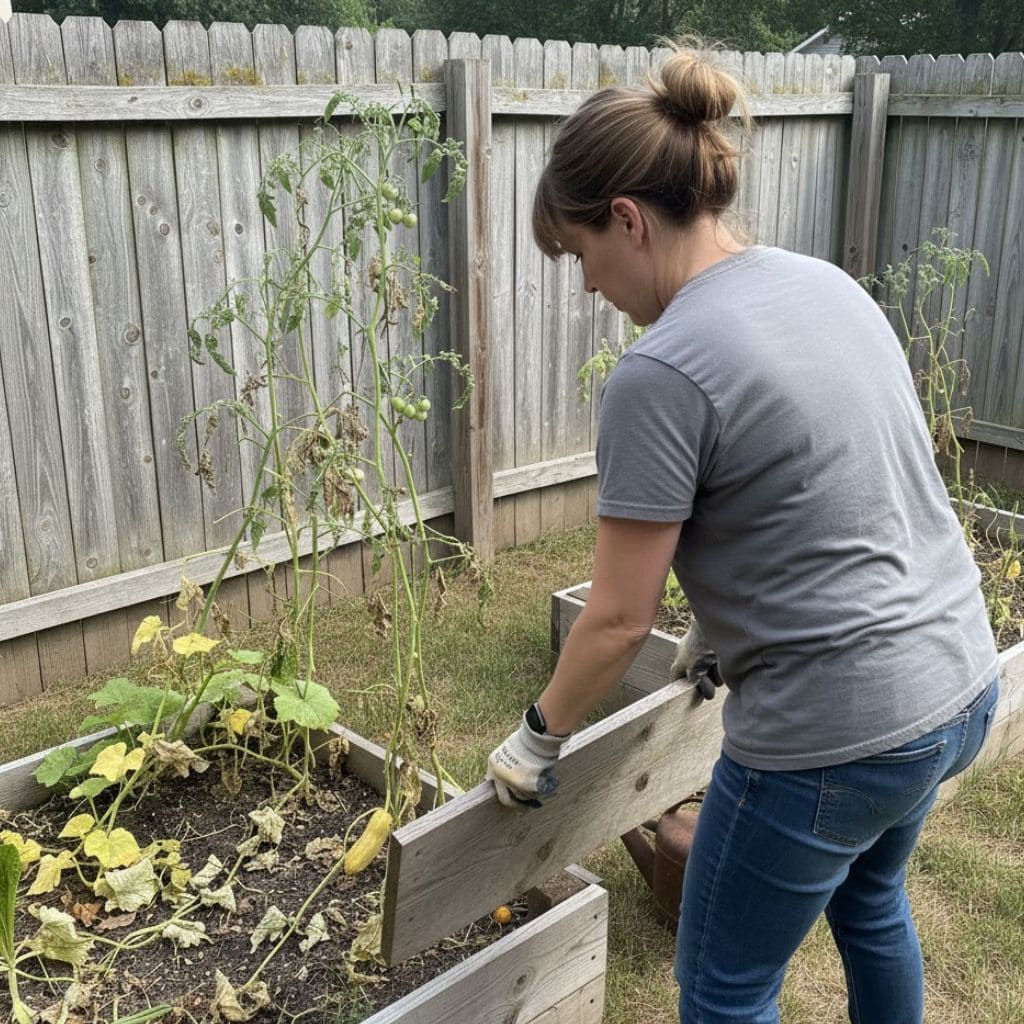
We spent nearly three hours clearing the space. I unscrewed the cedar planks and stacked them neatly along the fence in case I might reuse them someday.
I dug out the remaining roots, loosened compacted soil, and leveled the uneven ground with a rake.
William helped in his own way by collecting rocks into a plastic bucket and proudly presenting each one to me as if it were a treasure.
By late afternoon, the yard looked surprisingly open. Without the raised beds dividing the space, the grass stretched uninterrupted from one side to the other. The yard suddenly felt larger.
Planning a Practical Playground
I did not want an expensive, permanent play structure that would dominate the entire yard.
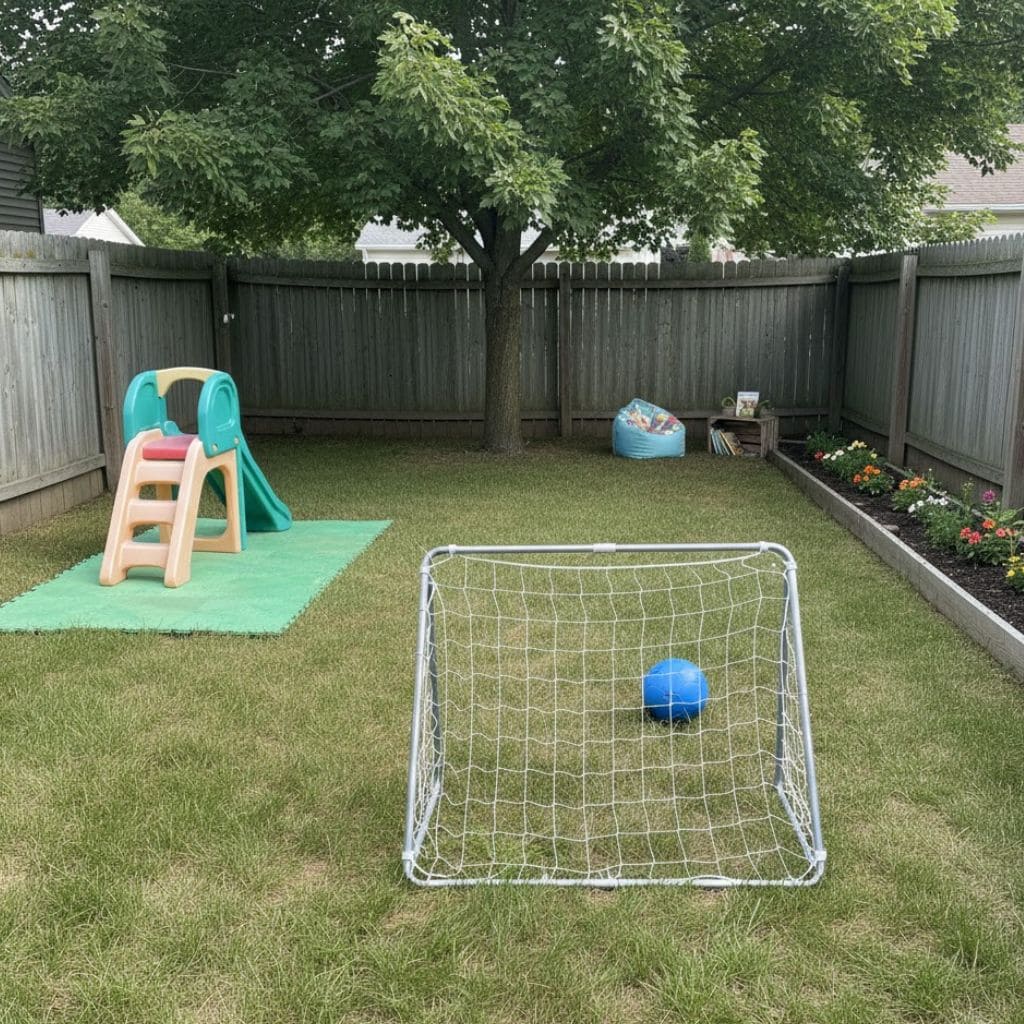
Then I measured the space carefully and divided it into three functional areas in my mind. The central section would remain open for running and ball games.
The left corner near the fence would hold a small slide and activity structure suitable for his age. The back shaded area beneath our maple tree would become a soft corner for reading or quiet breaks.
I ordered a compact youth soccer goal, measuring approximately four feet wide, from Amazon. I chose one with a lightweight metal frame and netting that could be disassembled if needed.
I also purchased a bright blue rubber soccer ball from Walmart that felt durable but soft enough not to cause injury if it bounced unpredictably.
For safety, I bought two interlocking outdoor foam mats to place beneath the slide area. They blend with the grass visually but provide cushioning in case of falls.
Installation Weekend
Two weeks ago, everything arrived on a sunny Saturday morning. The temperature hovered around 72 degrees with a light breeze, ideal for outdoor work.
We started with the soccer goal. I spread the metal poles across the grass and followed the instruction manual step by step. William handed me connectors and tried to match pieces by color.
The assembly took about forty-five minutes, including a short interruption when our dog decided one of the plastic joints looked like a toy and ran off with it.
Once the goal stood upright, secured into the grass with small stakes, we moved to the slide. It was a simple plastic model with a short climbing ladder and smooth surface.
I positioned it on the foam mats and tested its stability before allowing William to climb.
When everything was finally in place, he stood in the middle of the yard holding the new blue ball, scanning the space as if evaluating a professional stadium.
“This is better than the park,” he said.
The First Afternoon of Play
We kicked the ball back and forth across the newly cleared grass. The yard is not large enough for long passes, but it is perfect for controlled practice.
I showed him how to angle his foot slightly inward to guide the ball toward the net. He missed several attempts before finally scoring.
When the ball hit the back of the net, he threw both arms into the air as if he had won a championship game. I clapped louder than necessary.
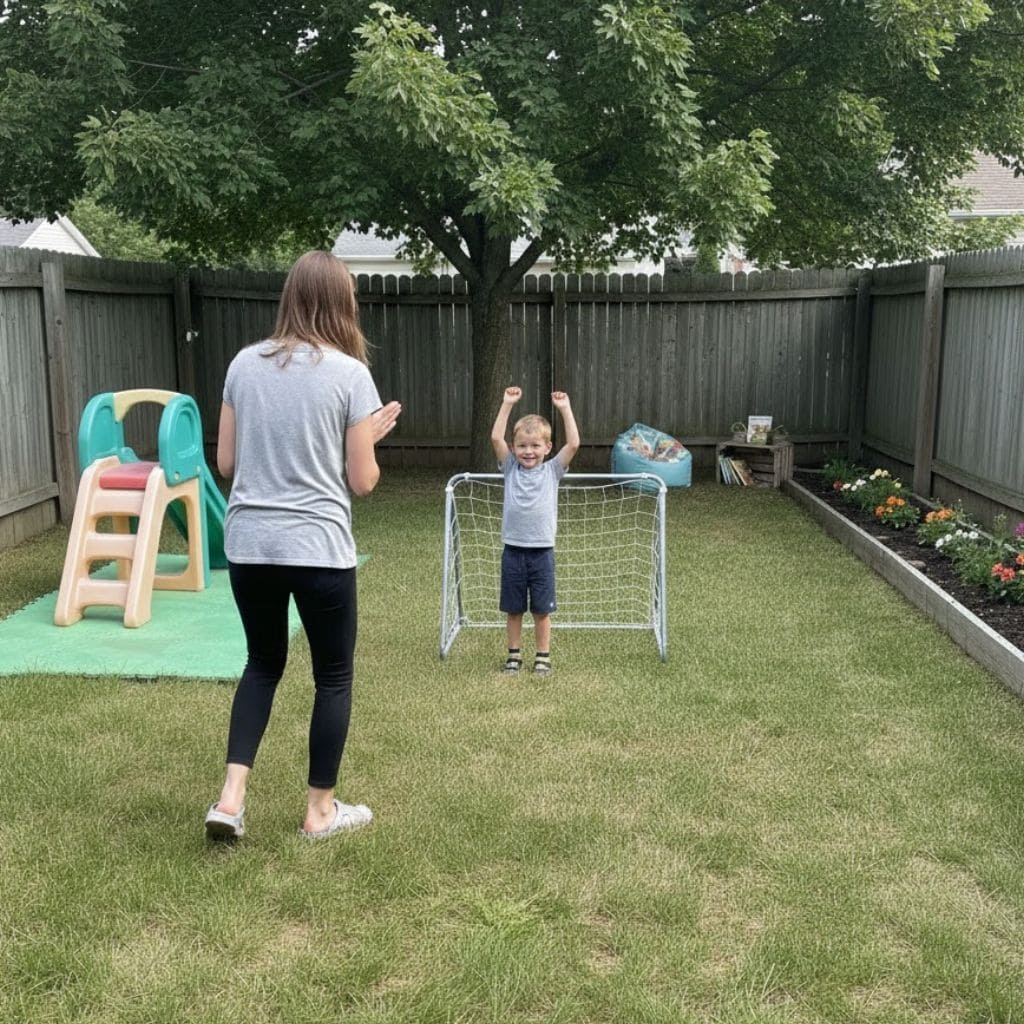
Later, he led our Pomeranian gently around the perimeter of the yard, avoiding the slide area and foam mats.
The open layout allowed him to run freely without worrying about stepping on wooden frames or uneven soil.
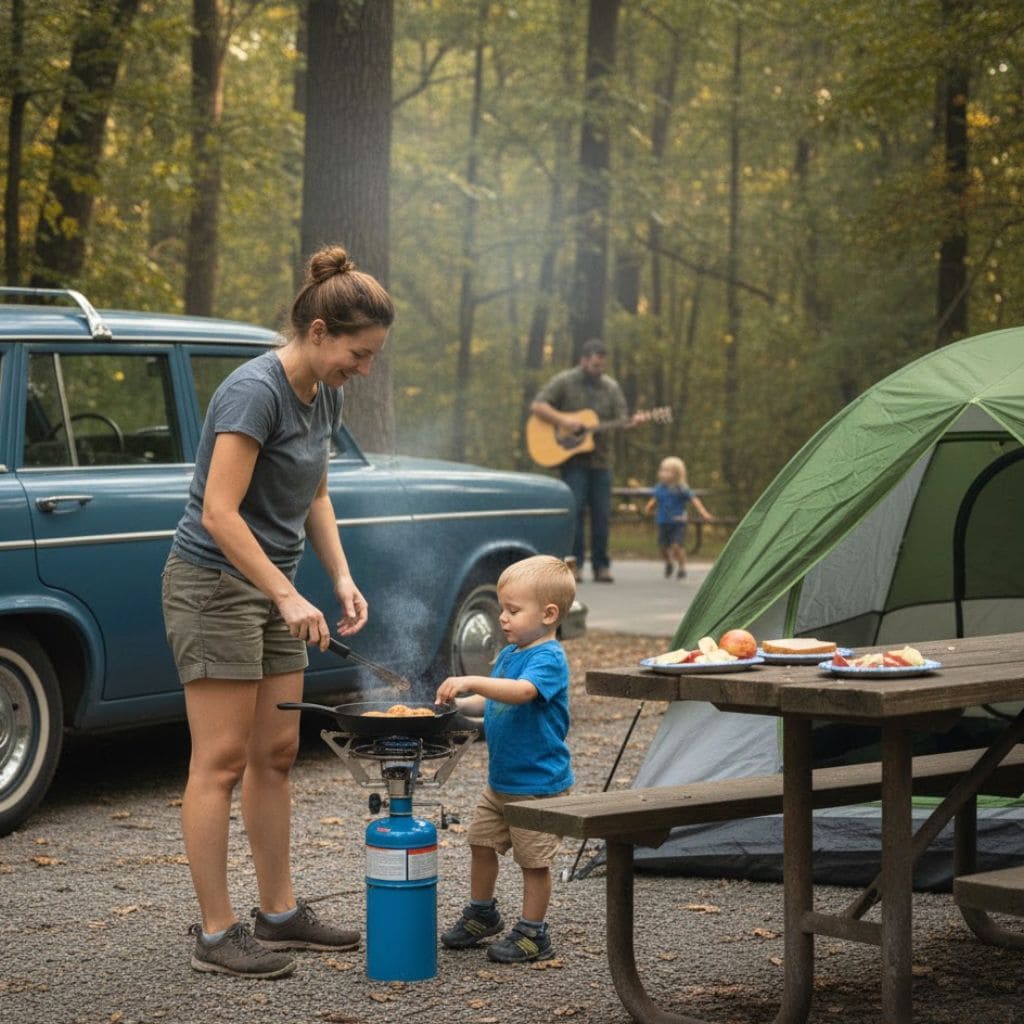
In the shaded corner, we spread a picnic blanket and shared apple slices and peanut butter crackers.
I brought out one of his favorite picture books, and we read while lying side by side on the grass.
What Changed Beyond the Physical Space
Since recreating the yard, our evenings have shifted noticeably. After dinner, William often asks if we can go outside instead of turning on television. Even twenty minutes of kicking the ball or practicing gentle goal shots gives him an outlet for energy.
I have also noticed something quieter in myself. I no longer look at the yard and see unfinished work.
Sometimes I still keep small pots of basil and mint near the fence because they are manageable and require less attention than a full vegetable bed.
Grass has already begun to show faint wear patterns where we run most often, but I do not mind. Those worn spots represent use and laughter.